
ABOUT ADI INDUSTRIES
Turning technical capability into deliverable space products
PRODUCT DEVELOPMENT & DELIVERY
From concept to product delivery
Founded in 2026, ADI supports the transition from early technical concepts and laboratory demonstrations towards representative-environment testing, qualification readiness and product delivery. Its focus is on establishing the engineering structure, objective evidence and clear development route needed to move technology forward.
Many promising technologies face a difficult transition between proof of concept and adoption within an industrial programme. They do not necessarily lose momentum because the underlying technology is unsuccessful. Progress can also stall because the intended application is insufficiently defined, requirements remain incomplete, interfaces and risks are not adequately controlled, or the evidence required to justify the next development decision has not been assembled.
At technology readiness level (TRL) 3 or 4, the next step is not necessarily another standalone research project. Progress towards demonstration in a relevant environment needs coordinated product-development support that connects customer needs, requirements, design decisions, development risks, verification activities and programme milestones.
ADI applies an industry-focused and ECSS-informed approach, tailored to the scope, maturity, risks and customer requirements of each project. Support can include:
- Assessing maturity against a defined target TRL and identifying the critical development gaps.
- Defining, allocating and maintaining a traceable technical-requirements set.
- Controlling key interfaces, assumptions, risks and design decisions.
- Preparing proportionate model, verification and qualification strategies.
- Linking requirements, verification methods and objective evidence through a Verification Control Document.
- Preparing technical-review evidence, including support for TRRs and ARBs where required.
- Supporting the assessment, disposition and close-out of NCRs.
- Supporting qualification planning and evidence for environmental test campaigns, including vibration, shock and thermal-vacuum (TVAC) testing.
- Maintaining technical baselines, configuration changes, development actions and verification close-out.
- Supporting technical design reviews, modelling and focused engineering analysis during development.
The purpose is not to impose documentation for its own sake. It is to create a controlled and traceable development thread from the intended use of a product through its requirements, design, testing and resulting evidence.
This gives your customers, partners and funding bodies a clearer basis for assessing maturity, building confidence in technical delivery and making the next programme decision. Development work is often carried out with limited resources. A controlled development thread helps teams identify critical issues and the evidence required for each milestone, then prioritise resources towards the work that matters most in a pragmatic and efficient way.
EXPERIENCE
Experience behind ADI Industries
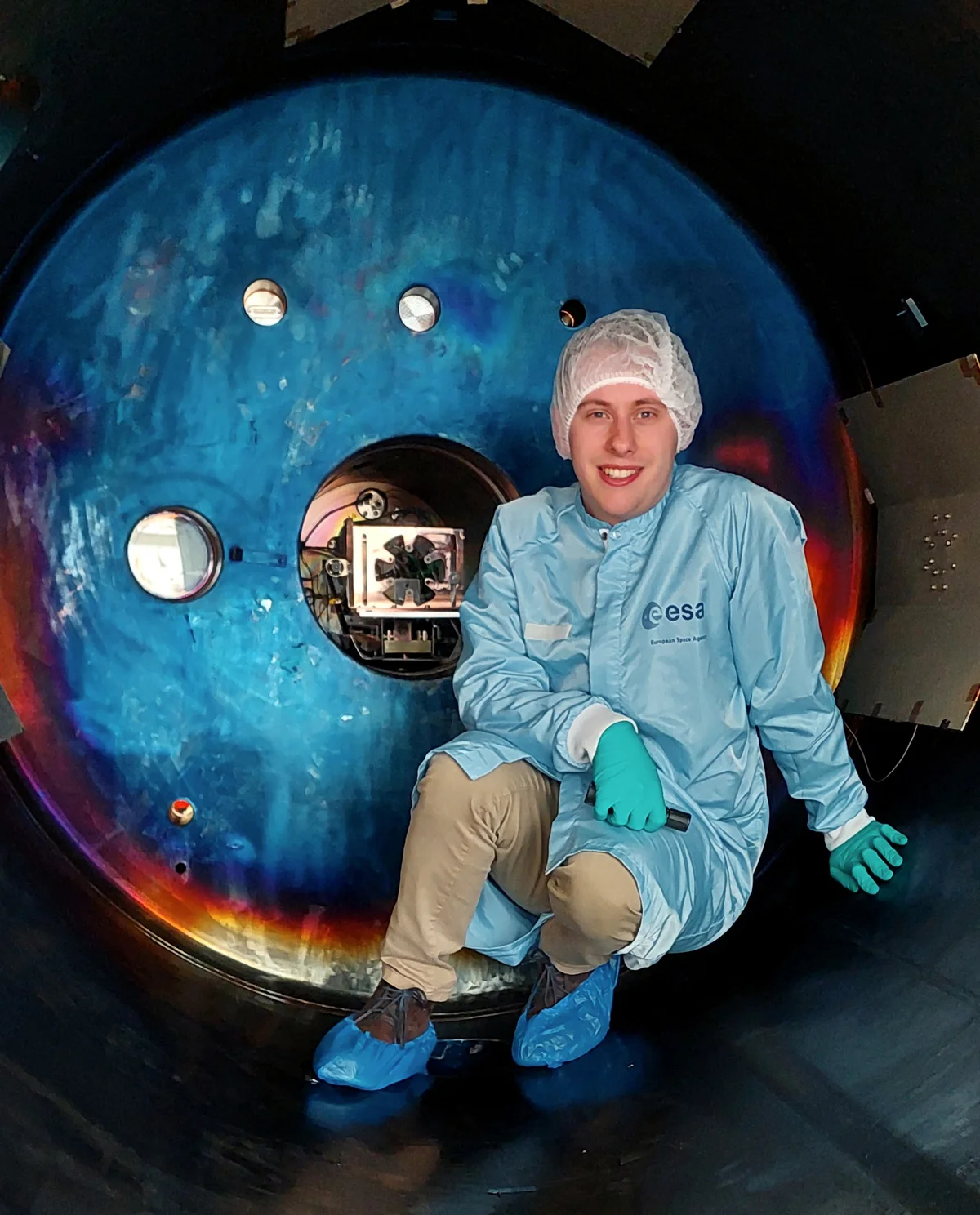
ADI Industries is led by Dr Alexander Daykin-Iliopoulos, who brings more than a decade of experience in space-engineering technology development and delivery, including technical leadership responsibilities within multidisciplinary and multinational engineering programmes.
Alex completed an MEng in Aerospace Engineering at Queen Mary University of London in 2014 before progressing directly to a PhD in Electrical Engineering within the Electronics and Computer Science (ECS) department at the University of Southampton. His doctoral work involved developing novel prototype plasma technologies for space engineering, alongside supporting industrial technology-development programmes.
Across his professional experience, Alex has led and supported technology-development and verification activities involving engineering teams, customers, partner organisations and suppliers. His work has encompassed complex space and plasma technologies, specialist test facilities, prototype and hardware development, experimental test campaigns, performance assessment, technical documentation and development planning.
Working across multinational programmes has reinforced the importance of bringing the right expertise together across disciplines and organisations at the point it is needed to support a sound technical decision.
His technical work has contributed to patented technologies and international journal and conference publications. The practical value of this background lies in connecting first-principles technical understanding with industrial execution: defining what needs to be achieved, planning how it will be demonstrated, interpreting the resulting evidence and using it to guide the next stage of product development.
Alex has led numerous successful technical proposals and programme-development activities with ESA, the UK Space Agency, UKRI and SPRINT. His experience extends across the project development cycle, from proposal definition and preparation through technical delivery to contract close-out.
COLLABORATION
Connecting research and industry
ADI can provide particular value where strong technical capability already exists but the route to an industry-ready product requires additional structure, independent engineering judgement or delivery capacity.
For universities and research organisations, this can mean translating technical results into defined requirements, development activities and verification evidence that industrial partners can assess and adopt. For companies, it can mean providing focused support to address a development risk, prepare a TRR or ARB, resolve an NCR or move a product towards its next maturity milestone.
ADI combines technical depth with an understanding of how engineering products are planned, controlled, verified and delivered. It can also bring the appropriate industry connections and specialist expertise into a development activity when additional support is needed to resolve a defined technical or programme challenge.
ENGINEERING TOOLS
AI as a supporting engineering tool
Artificial intelligence is a supporting element of ADI’s approach. Engineering expertise remains central.
Used carefully, AI can assist with activities such as technical information retrieval, data triage, requirements analysis, documentation and repeatable engineering workflows. It can reduce time spent processing large bodies of information and allow specialists to concentrate on higher-value technical decisions.
Its application must remain proportionate and controlled. Outputs need appropriate expert verification, intellectual property and confidential information must be protected, and responsibility for engineering decisions must remain clear.
ADI is developing practical applications of these tools that can improve engineering productivity while preserving traceability, information security and technical oversight.
WORKING WITH ADI
What clients can expect
Clients working with ADI can expect:
- Delivery-focused technical judgement.
- A clear route towards the next product-maturity objective.
- Proportionate engineering processes and controls.
- Decisions supported by traceable evidence.
- Clear technical outputs aligned with customer and programme needs.
- Practical collaboration across organisational and disciplinary boundaries.
ADI Industries exists to help organisations turn technically promising ideas into credible products and programmes capable of progressing, attracting support and standing up to scrutiny.
LET’S TALK